Introduction
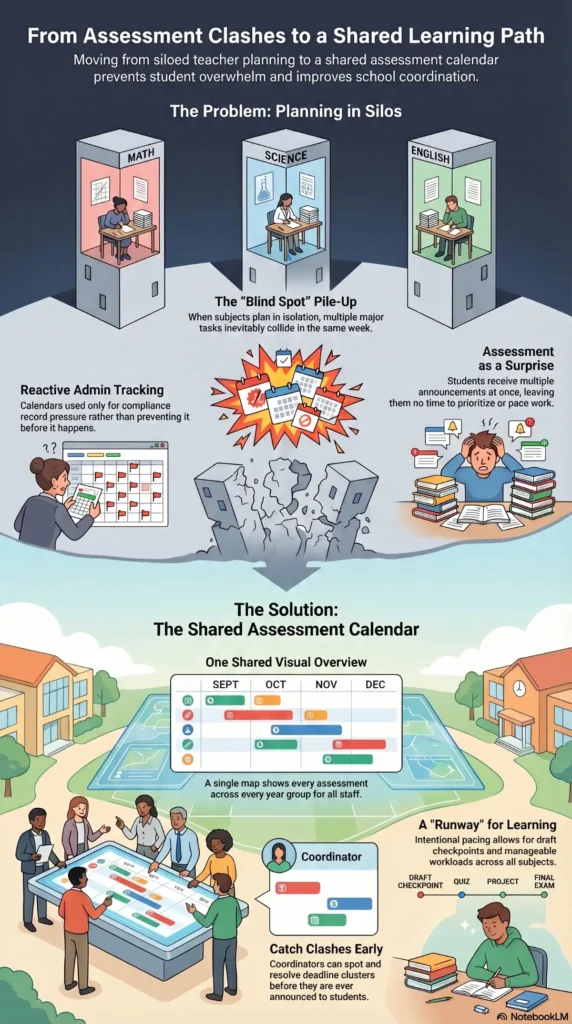
Most schools treat the assessment calendar as an admin document — a place to track due dates, avoid clashes, and keep parents informed. That’s too small a job for a tool that can shape how students plan, pace, and respond to learning.
Picture this. It is a Tuesday afternoon. A Year 9 student arrives home, drops their bag, and their parent asks: “Do you have anything due soon?” The student shrugs. “I don’t think so.”
On Thursday, three teachers announce summative tasks due the following Friday. The student has no idea how to prioritise. Their parent has no idea how to help. And the school trip the coordinator just booked? Same week.
Nobody did anything wrong. But nobody had the full picture either.
When students can see assessment as a sequence instead of a surprise, they make better choices and develop assessment literacy. They’re more likely to manage workload, spot pressure points early, and build the habits linked to student agency and self-management. That’s also why tools like an assessment roadmap for student agency matter; they turn planning into part of the learning process, not a task hidden behind teacher systems, especially through assessment co-creation. For educators trying to build healthier assessment practices, this shift changes the purpose of the calendar itself, and that’s where the rest of this discussion begins.
What An Assessment Calendar Really Is, And What It Is Not
An assessment calendar is simple at its core. It visualizes the assessment process by showing what is coming, when it is coming, and how the work builds over time. But in strong schools, it does much more than list dates. It acts as a shared planning tool that helps teachers and students see the learning journey before the pressure hits.
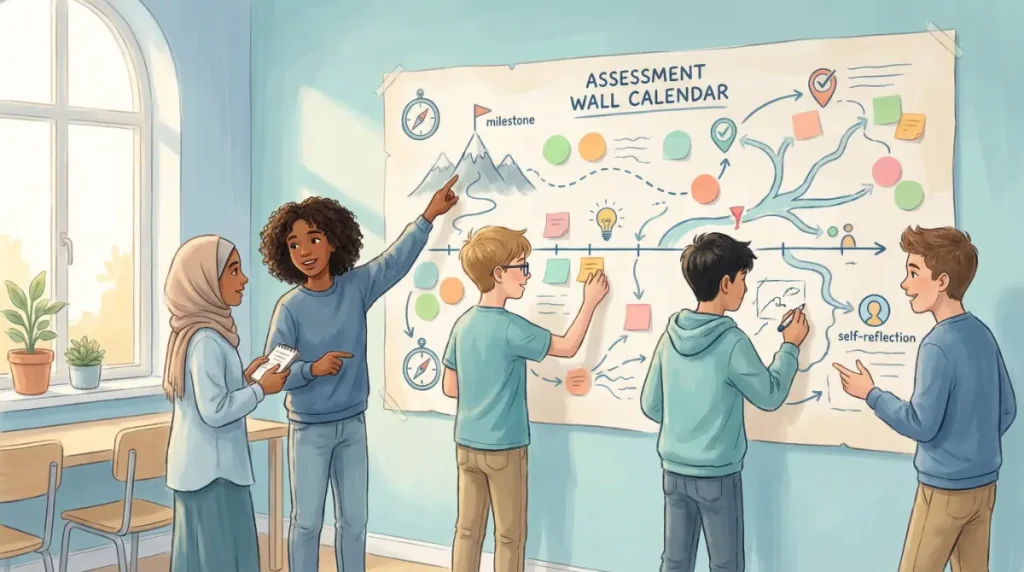
That shift matters. When the calendar is visible early, people can make better choices. Teachers can space major tasks, students can plan effort across weeks, and teams can spot overload before it turns into stress. In that sense, an assessment calendar works less like a notice board and more like a map.
More than a spreadsheet of due dates
A due date tracker tells you when something ends. An assessment calendar should also help you see what needs to happen before that point in the assessment process. It makes the path to the task visible, not just the final stop.
For example, a useful calendar, often powered by digital tools, can show patterns such as:
- when major summative assessments cluster
- where formative assessment draft checkpoints would help through assessment co-creation
- which weeks are heavy across subjects
- when students need time for feedback, revision, or reflection
That is why an assessment calendar connects closely to tools like an assessment roadmap for student agency. Both help students see assessment as a sequence of decisions, not a string of surprises.
If students only see the deadline, they plan for completion. If they see the timeline, they can plan for learning.
What an assessment calendar is not
It helps to be just as clear about what this tool is not.
An assessment calendar is not only a compliance document for leaders. If it lives in a folder that students never open, it cannot support learning. It may satisfy a reporting need, but it won’t shape day-to-day choices.
It is also not a last-minute posting board. When tasks appear only after teachers have already assigned them, the calendar becomes reactive. At that point, it records pressure instead of preventing it.
Just as importantly, it is not only for adults. Students need access to the same big picture if they are expected to manage time, respond to feedback, and adjust effort. That idea lines up with systematic formative feedback for self-regulating learners, where learners improve because they can see where they are going and what to do next.
Whole-school, grade-level, and class-level calendars each do a different job
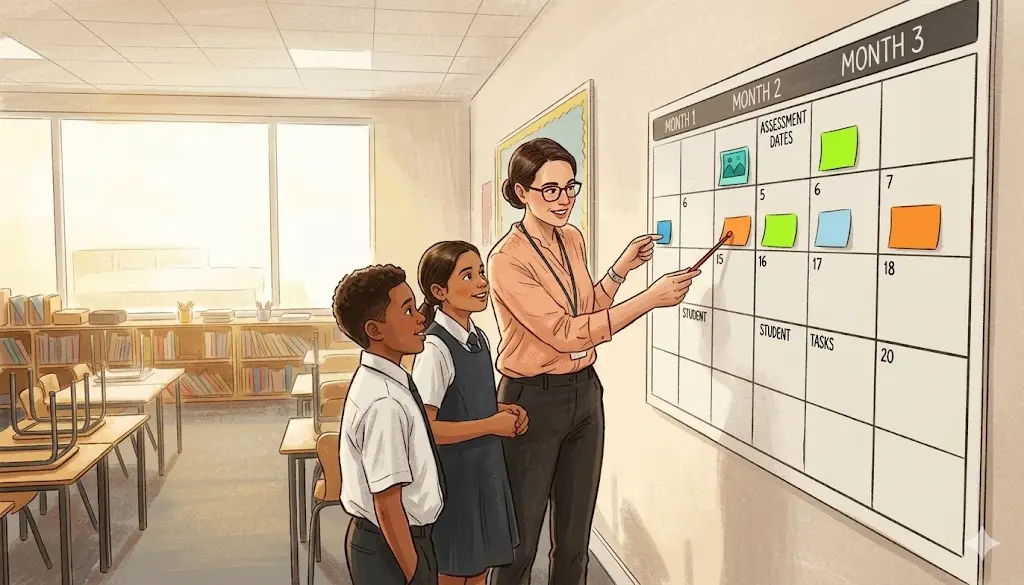
Not every assessment calendar has the same job. Whether a school needs one calendar or several depends on a few practical factors: school size, assessment purpose, and scheduling complexity. A small school with simple patterns may do fine with one shared view. A larger school, or one managing multiple high-stakes tasks and checkpoints, may need separate whole-school, grade-level, and class-level calendars.
| Calendar type | Main purpose | Best use |
|---|---|---|
| Whole-school | Shows major assessment windows and shared pressure points | Supports broad coordination and workload balance |
| Grade-level | Aligns tasks across a year group | Helps teams avoid overload and pace learning sensibly |
| Class-level | Makes the immediate learning sequence clear for students | Supports planning, feedback cycles, and task preparation |
Each version matters, but they should connect. A whole-school view can prevent bottlenecks, while a class-level view helps students act on what they see this week and next. At each level, the calendar should help students build practical self-management habits. That means giving them clear chances to practice approaches to learning skills, manage each task in smaller steps, stay organized, and use time well before deadlines become a problem.
The real value shows up before assessments are assigned
The best assessment calendars prove their value early on. They matter most before tasks are locked in, not after. Instead of just logging what has already been decided, they help shape better decisions from the start.
A team might notice that three subjects planned major submissions in the same week, so one task moves earlier and another adds a draft checkpoint via assessment co-creation with students. A teacher might see a crowded month and shorten a task, change the format, or build in more class time. Students, in turn, get a clearer runway.
That is the point. A good assessment calendar does not just organize school life. It improves it by helping everyone make smarter choices early, when change is still possible.
Students can see what is coming, and actually plan for it
A strong assessment calendar changes more than scheduling. It changes student behavior. When learners can see deadlines, checkpoints, and major tasks early, school stops feeling like a series of surprises and starts to feel more manageable.
That visibility matters because most students do not struggle only with effort. They struggle with timing. If the full picture stays hidden until the last minute, even motivated students end up reacting instead of gaining autonomy through planning. A shared calendar gives them a wider view, so they can pace work, protect revision time, and make calmer choices before pressure builds.
Clear timelines reduce stress and last-minute work
Students often fall behind for a simple reason: they can only see one subject at a time. A science lab report might seem manageable on its own. The same week might also include a history essay, a math test, and a language oral. Without that bigger picture, the workload sneaks up on them.
Once timelines are visible in one place through assessment co-creation, the pattern changes. Students can spot heavy weeks early and break work into smaller steps. Instead of treating a project like one huge block, they can plan it as learning pathways: research this week, outline next week, draft after that, then revise before submission.

That shift lowers stress because students gain time to think, not just time to finish, which builds their self-efficacy in completing tasks. They don’t need to wait for panic to tell them a week is overloaded. They can see it coming and respond while there is still room to adjust.
Here is what that looks like in practice:
- A draft starts earlier because the final due date is already visible.
- Revision gets its own time slot instead of being squeezed in the night before.
- Smaller checkpoints stop the task from becoming one large, stressful rush.
- Students are less likely to give every subject the same attention at the same moment.
When students can see the road ahead, they stop driving by emergency.
This is also where calendars support healthier habits. Students learn that planning is not just writing down due dates. It’s deciding when each part of the work begins. That is a big difference. A deadline tells you when something ends. A clear timeline helps you decide when to start, pause, review, and improve.
Planning improves when students can compare demands across subjects
Students make better choices when they can compare all major demands in one place. A single calendar lets them notice clusters of tests, performances, presentations, and long-term projects before those tasks collide, especially when shaped by assessment co-creation. That broad view helps them think like planners, not firefighters, fostering student agency in managing their schedules.
Secondary students often need explicit guidance to make these choices well, including many older students. Teachers may need to show them how to read the calendar, spot busy weeks, and decide what to start earlier or where to get help. With that support, students can begin work earlier, adjust revision time, and ask for help before deadlines pile up. Over time, some students will take more of the lead, but that usually happens through practice, not by age alone.

A visible calendar helps students make moves like these:
- They shift earlier tasks forward, such as note-taking, reading, or source collection.
- They adjust revision plans based on which assessments need the most practice.
- They ask for help sooner, while there is still time to use that support.
- They avoid false confidence, because they can see that one “easy” week is not actually empty.
That last point matters. Students often think they have plenty of time because one subject looks quiet. Then another class adds a major task, and the whole plan collapses. When all subjects sit side by side, those blind spots shrink.
In other words, comparison improves judgment. Students can tell the difference between a normal week and a crowded one. They can decide when to go hard, when to maintain, and when to protect energy. That kind of planning is closely tied to the habits behind self-management and learner agency, which is why a visible timeline supports the same kind of growth described in systematic formative feedback for self-regulating learners.
The result is not perfect balance every time. School is still busy. However, students are far less likely to get trapped by avoidable overload. They can see what is coming, act earlier, and use their time with more purpose, contributing to greater academic achievement.
Assessment calendars build self-regulation skills, not just organization
An assessment calendar does more than keep students organized. When students use it well, they practice the same habits that sit at the heart of self-regulated learning: anticipating demands, setting priorities, monitoring progress, and adjusting plans.
That shift matters because school success is rarely about remembering one due date. It’s about seeing the path ahead and managing your effort along the way. A good calendar helps students stop thinking, “What do I have due?” and start thinking, “What should I do next, and how will I know I’m on track?”
Students learn to set goals, pace themselves, and check progress
A calendar gives students something many of them need but don’t always have, a clear view of time. Once they can see a task on the horizon, they can break it into smaller moves through assessment co-creation. That is where self-management starts.
Students can break big tasks into mini-goals. A three-week project becomes a few clear steps: choose a topic, find sources, make a plan, draft, then revise. On the calendar, it feels less overwhelming and more manageable.

This is also where executive function becomes visible in simple, age-appropriate ways. Students learn to:
- plan when to start, not just when to finish
- decide which task needs attention first
- track what is done and what still needs work
- notice when a plan is slipping
- make a new plan before stress takes over
Those are not small skills. They shape how students handle pressure across every subject.
For younger students, this may look very concrete. They might circle two work sessions before a due date, add a reminder to bring materials, or check off one step each day. Older students can go further with assessment co-creation. They might compare workload across subjects, move study sessions around, or give more time to tasks that need drafting and revision.
A useful calendar doesn’t just hold dates, it helps students make decisions.
The real gain comes from pacing. Many students either start too late or try to do everything at once. A visible timeline helps them spread effort across days and weeks. That makes the work better, and it usually makes the experience calmer too.
Progress checks matter just as much. When students return to the calendar and ask, “Am I where I planned to be?” they are practicing self-reflection while developing metacognitive skills. If the answer is no, they can adjust early. Maybe they need to shorten one goal, ask a teacher for help, or use class time more wisely. That act of noticing and responding is the heart of self-regulation.
Parents and schools both make better decisions when the calendar is visible
A visible assessment calendar helps adults do something simple but important: see patterns early. That changes the kind of support students get at home and at school. Instead of reacting to stress after it spikes, adults can spot pressure points sooner and respond with better timing. With educational technology making these calendars easy to share and update, AI assistance can even highlight potential schedule clashes before they become problems.
That matters because students need support, not a second layer of pressure. When the calendar is clear, parents can back their child without taking over, and schools can plan learning with more care across subjects.
Parents can support without guessing or rescuing at the last minute
When families can see key dates and busy weeks, home conversations improve. Parents don’t have to ask vague questions like, “Are you on top of things?” They can ask better ones, such as, “What needs to start this week?” or “Which subject looks heaviest right now?” That small shift moves the focus from panic to planning. AI assistance here can help students break down tasks from the calendar into manageable steps.
A visible calendar also helps families shape routines around real demands. If a major task is coming up, they can protect quiet study time, reduce avoidable schedule clashes, or help their child break work into smaller steps. As a result, support feels calmer and more useful.

Still, the goal is not parent control. A good calendar should help adults coach from the side, not steer every move. In practice, that means parents can:
- notice when a heavy week is coming and prompt early planning
- help students protect time at home without managing every task
- reduce conflict by talking about workload before emotions run high
The best parent support sounds less like supervision and more like, “What’s your plan?”
That balance matters. If adults rush in only when things fall apart, students learn to wait for rescue. If they use the calendar to build routines and ask smart questions, students keep ownership of the work. These habits also prepare them for the demands of higher education.
Schools can schedule around learning, not just around convenience
Schools benefit from the same visibility. When grade teams and leaders can see assessment timing across subjects, they can catch bottlenecks before students feel crushed by them. That’s especially helpful in interdisciplinary programs, or in schools where multiple subjects set major deadlines at once. AI assistance can quickly scan for these overlaps and suggest adjustments.
For example, one team may notice that a science report, a history essay, and a language presentation all land in the same week. With that view, they can spread deadlines, add checkpoints, or shift one task earlier while there’s still room to adjust. That protects time for teaching, feedback, and revision, instead of turning every class into deadline management. Teacher-student conferences focused on assessment co-creation make this collaborative.
A clear calendar helps schools make stronger planning choices:
- They can avoid stacking major assessments in the same week.
- They can spot months where workload builds too fast.
- They can protect teaching time, instead of losing it to rushed completion.
- They can coordinate better across subjects with shared students.
This is where calendars stop being admin tools and start acting like learning tools, especially when tied to the broader assessment process. They show whether the schedule gives students a fair chance to do quality work. In many schools, that same thinking also connects well with using an assessment roadmap, because both approaches push teams to plan beyond isolated due dates and think about the full learning sequence. This shift in power dynamics from teacher-controlled to student-facing systems supports better outcomes.
Most importantly, visibility helps adults stay in the right role. Parents can support independence at home. Schools can design smarter timelines. Students, then, get something they rarely get by accident, a better chance to manage real work without unnecessary overload.
Conclusion
If an assessment calendar only helps adults track dates, it’s underused. Its real job is to make learning more visible, empowering student agency so students can plan ahead, regulate effort, use feedback well, and move through a more balanced assessment system with less guesswork and less last-minute stress. This visibility also sparks intrinsic motivation by fostering a sense of control and deeper student engagement.
That is the shift worth holding onto from the start of this post. A calendar should not sit in the background as a staff-facing schedule; it should sit in front of students as a practical tool for pacing, revising, and making better decisions before pressure builds.
So the next step is simple: re-examine the calendar your school already has through the lens of assessment co-creation. If students can’t use it to see what is coming, respond to checkpoints, and manage workload across subjects, then the tool needs a new purpose informed by critical pedagogy, transforming the school calendar into an equity tool. When the calendar becomes student-facing, assessment stops feeling like a pile of deadlines and starts working more like a learning pathway; ungrading emphasizes self-regulated learning over compliance. This approach even prepares students for higher education, where ungrading truly supports future readiness.
Template
Grab the template here: https://alisonyang.com/product/secondary-school-summative-assessment-calendar/