Uncategorized

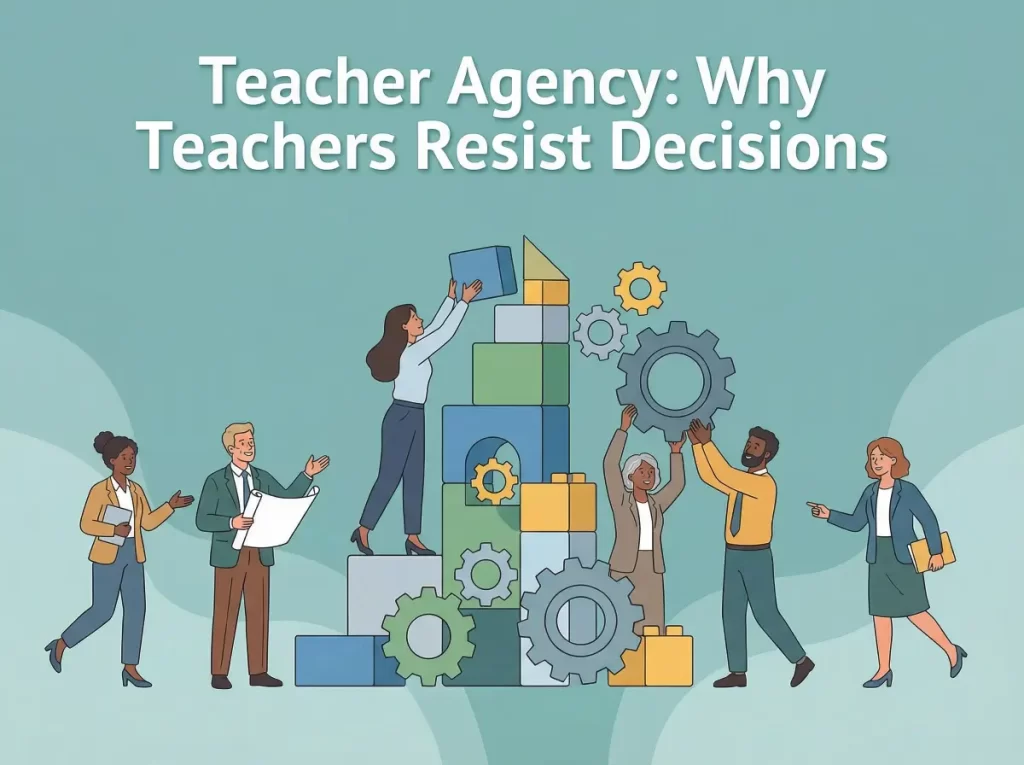
Teachers Don’t Resist Change, They Resist Decisions Made Without Them

Introduction Anyone who’s built a plain IKEA bookshelf knows this feeling; you value it more because of the sweat equity you put into assembling it yourself. Even if a better-made version sat next to it, the one you helped create would still feel more worth keeping. That’s the IKEA Effect, a cognitive bias that explains […]

Teachers Don’t Resist Change, They Resist Decisions Made Without Them Read More »

Teacher self-efficacy concept illustration showing stacked books with glowing light bulb symbolizing building confidence and impact in the classroom

Teacher Self-Efficacy Isn’t Optional. It’s Essential.

Introduction Teacher self-efficacy—the belief that educators can make a real difference—is being tested like never before. It’s mid-November. Teachers everywhere are running on empty, and if you’re in education, you know exactly what that looks like. The alarm goes off, and before your feet hit the floor, you’re already thinking about the mountain of grading

Teacher Self-Efficacy Isn’t Optional. It’s Essential. Read More »

Secondary school student sits at a desk confidently presenting an artifact of learning to a female teacher and both parents (mom and dad), all seated and actively listening in a classroom setting. Keywords “growth,” “agency,” “collaboration,” and “reflection” are featured, illustrating a supportive, student-led learning conversation.

3-Way Conference: Effective Questions to Building Partnerships

Introduction As a secondary school teacher, I’ve participated in countless 5- to 10-minute parent-teacher-student conferences. For years, I followed the traditional script: present the grades, highlight a few strengths, point out areas for improvement, and answer a couple of questions from parents. Meanwhile, the student—the most critical person in the room—often sat quietly on the

3-Way Conference: Effective Questions to Building Partnerships Read More »

Back to School - Student Transition

Student Transition Success: 4 Guiding Principles for Secondary School Transitions

Introduction Student Transition Model frameworks can support students by applying cognitive learning theory to help them build independence, agency, practical skills, and a strong sense of belonging during transitions. After a restful summer break, I, like many fellow educators, am slowly shifting gears and preparing to welcome students back for a new academic year. There’s

Student Transition Success: 4 Guiding Principles for Secondary School Transitions Read More »

Inquiry-Based Learning: Overcoming Challenges with Effective Strategies

Inquiry-Based Learning: Converting 8 Challenges into Opportunities for Teachers

Introduction Inquiry-based teaching and learning has been actively promoted and implemented among different age groups. This teaching approach invites students to engage in the learning process by asking questions, conducting investigations, and developing critical thinking skills, thereby fostering a more dynamic and interactive learning environment. The method encourages curiosity and guides students to explore real-world

Inquiry-Based Learning: Converting 8 Challenges into Opportunities for Teachers Read More »

Collaboration Planning Checklist; Proactive Collaboration for Effective Team Work

Proactive Collaboration: Overcoming Assumptions with a Teamwork Checklist

Introduction Proactive collaboration is essential for preventing breakdowns and ensuring effective teamwork from the start. In today’s fast-paced work environment, collaboration is key to achieving success in any team setting. Yet, common assumptions can often stand in the way, hindering the effectiveness of teamwork and stalling potential breakthroughs. Many people think that collaboration is about

Proactive Collaboration: Overcoming Assumptions with a Teamwork Checklist Read More »